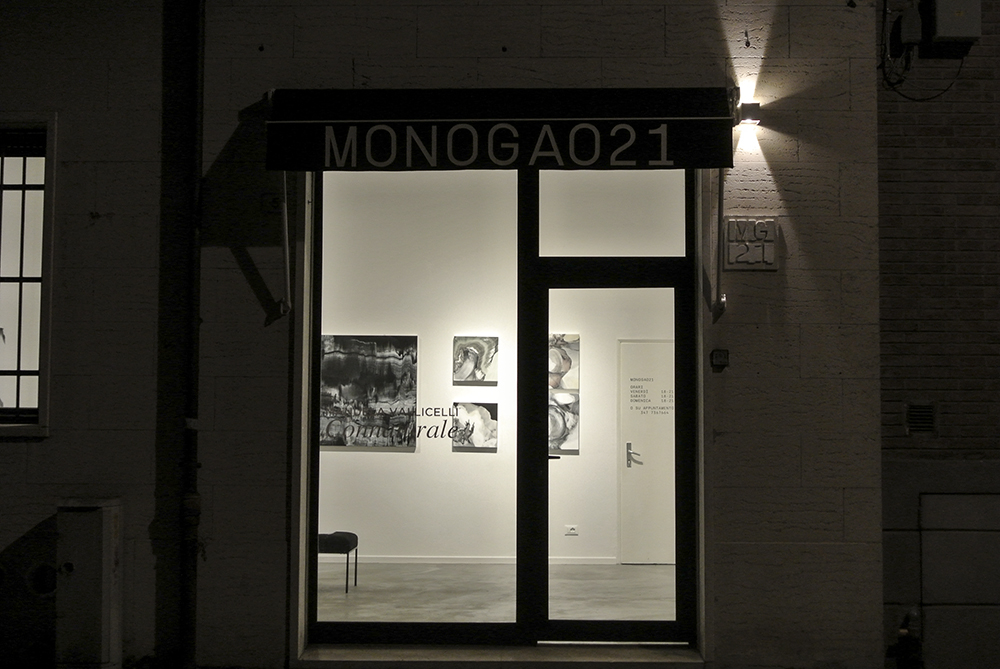
Connaturale solo exhibition at the Monogao21 gallery, located at Via Alberoni 5 in Ravenna, curated by Luca Donelli.
PRESS RELEASE
Monogao21 presents Manuela Vallicelli, an artist who graduated from the Academy of Ravenna but whose life, unanchored by strong roots, has taken her through many places, including years spent living in Nigeria, training in Milan, and winning the prestigious Marina di Ravenna Prize in 2011.
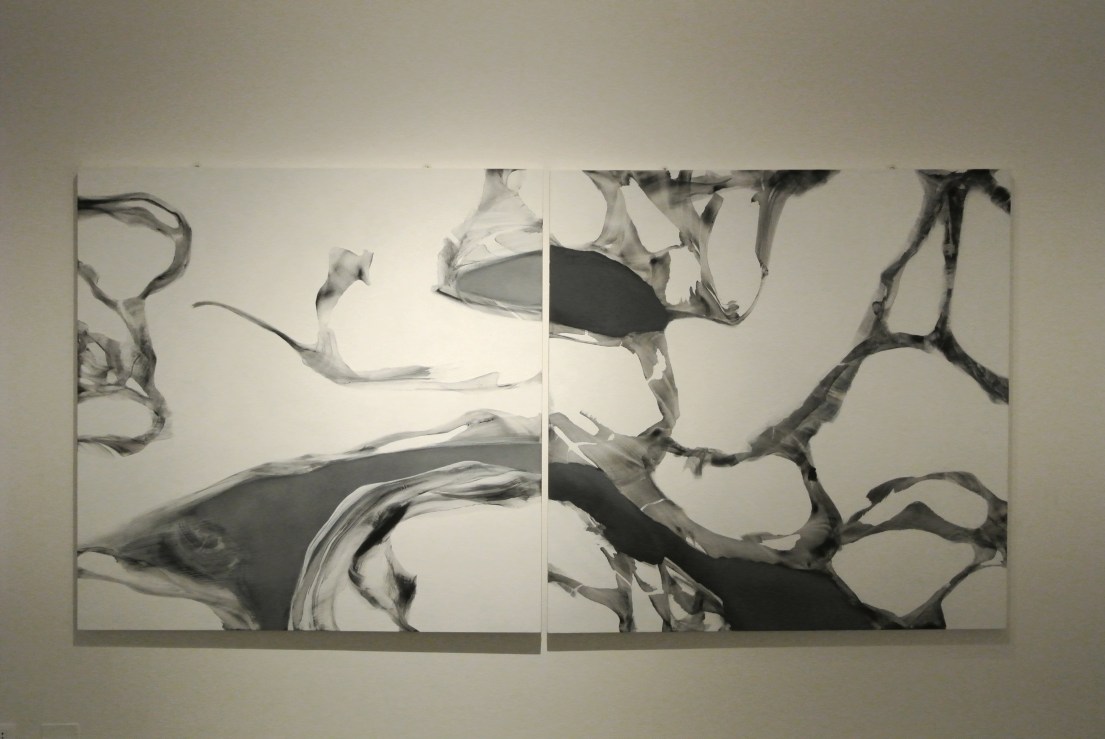
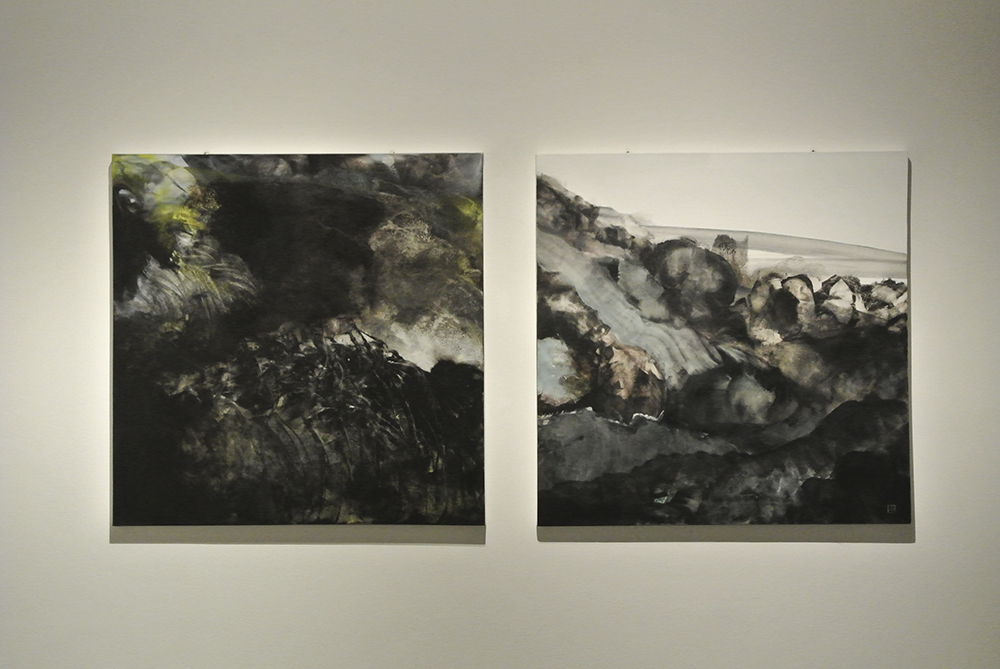
Manuela Vallicelli presents a series of new works, most of them large in scale, with colors evoking water, ice, darkened skies, and unfathomable depths. Powder pigments and oil paints rest on pristine canvases with a discreet, never overbearing or assertive touch, almost a whisper. Her poetics are closely tied to the natural elements: mountains, sky, wind, forces that do not scream or clamor, but instead softly murmur from places wrapped in silence. Her paintings exude unfamiliar landscapes, either because they are merely suggested or because they come from worlds still in formation. The viewer’s task is to discover them without prejudice, just as one approached post-war abstraction.
The exhibition opens on Friday, February 10 at 6:30 PM and will be on view at the Monogao21 Gallery, Via Alberoni 5, Ravenna, until March 10. Opening hours: Friday to Sunday, from 6 PM to 9 PM.
Catalogue Connaturale, MonoGao Gallery.
Exhibition catalogue featuring texts by Luca Donelli, Anna Orlando, Laura Facchi, and Eleonora Savorelli.
Anna Orlando
art historian, specialist in early Genoese and Flemish painting.
Consistency of mark and gesture, not only in terms of “style”, a word as necessary in critical discourse as it is elusive and unwelcome.
Manuela Vallicelli never betrays her “manner”: from her earliest works, in the early years of this new century, a color with a clear and direct connection to the earth, blending with oil without losing its dense, texture identity, is united with the fluidity of an immediate painterly gesture. Strong and graceful at the same time. Never restrained or descriptive; never closed-off or didactic.
The image seems to emerge after the fact. Where beforehand, there is feeling.
In the image seems, Vallicelli seeks nature: both external and internal. She seeks resonances with what is most tangible and shareable, throught a familiarity with the everyday that belongs to all or to many. This is evident in the titles given to canvases that are unmistakably the offspring of a gestural form of abstraction. An evanescence (og great beauty and powerful seductiveness) that nonetheless seeks a rock to anchor itself to, a valley to flow through; a cliff to descend in a vortex; a sky in which to disperse into the wind.
From her first instinctive insights into her own language, Vallicelli has not stayed. She proceeds with coherence in exploring worlds both within and otside herself. To offer them to us, who receive them often not without discomfort, due to how deeply they touch and stir our emotions: proof of the presence of a force that, in the coherence of a distinctive and inexhaustible (though delicate) gesture, never loses its strength.
Eleonora Savorelli
independent curator and exhibition registrar, president of the Marte Association.
Everything has disappeared.
Two-tone horizons trace inner landscapes at the threshold of visibility, like impressions of a distant memory, traces of a time that perhaps never existed.
Veils glide lightly across the canvas, leaving subtle gradations. Their passing gestures paint impossible scenarios that take shape through the viewer’s gaze, observing, reflecting, imagining worlds. Manuela Vallicelli creates and destroys in a single impulse. Without any preparatory drawing, she gives life to essential landscapes, stripping them of the superfluous, of adjectives.
The artist produces visions that are scars of life, perhaps inscrutable. They are intense strokes painted in one breath: the brush never leaves the canvas, as if in apnea. Her work expresses an urgent need to bring precise sensations outward. Imagination here is the only tool to interpret these compositions.
In Vallicelli’s research, nature is the generator of everything. Suspended between realism and abstraction, her marks become industrious hives, winding paths, multifaceted clouds, gentle streams, veins of marble and wood, air currents, wind-driven dunes, bird nests, ocean waves. What remains, allowing analysis and perception, is essence, the bone structure of the landscape and of the organisms inhabiting it. Certain lines seem to use all their inner strength to prevent dispersion, while those contained within, like in Prometheus, seem to seek separation and emancipation.
Vallicelli explores her artistic language with the aim of bringing the invisible into being through the visible, the mysterious through the real. The expressiveness of her poetics conveys the substance of an impression, stripped of any identifiable trace of the surrounding environment.
Before our eyes unfold metamorphic environments in constant evolution, like the human soul.
Vallicelli’s light veils act as bridges for thought. Like the veil of Maya described by Arthur Schopenhauer, they are veils of illusion, showing humans a world that, in the philosopher’s words, is “like a dream, like the shimmering sunlight on sand mistaken from afar for water, or a rope lying on the ground taken for a snake.” At the same time, in their fluid dynamism, these veils open toward the real world, offering an infinitely extended potential for interpretation, just like the individual perceptions and experiences that allow us to discern the works.
Transient landscapes, impressed in memory as intensely as they are elusive.
Laura Facchi
writer, journalist and editor.
There are few people in the world as genuine and transparent as Manuela. I have known her for many years; we were very young when our paths first crossed in Ravenna, and at the beginning her dreamy, gentle way of being seemed to me like a construct aimed at gaining acceptance from others. I looked at that girl, stained with paint, with muscular arms and peach-like skin, with a certain strange detachment. Who are you? I wondered, as if I were facing a being from another world. She always said exactly what she thought, and most of the time her thoughts were original and hard to understand. She was comfortable being alone; she did not paint to please others, but to please herself.
The day I entered her studio for the first time, everything changed. Manuela’s language had been incomprehensible to me because, until then, I had been tuned to the wrong frequency, and her words reached me fragmented. Her paintings, the horizons of her early period, the forms of nature reshaped by her complex inner self, the unsettling and overwhelming beauty that her strong, beautiful body could create, were her true language. They completed her words; they were the right frequency through which to understand and see Manuela.
“Would you write something for my catalogue?” she asked me a few weeks ago. It was a request I accepted with both joy (it makes me proud) and fear (I know nothing about art). As I tried to imagine myself capable of speaking about forms and colours, visions and abstraction, I remembered our first meeting, the difficulty of finding harmony, that strange aura surrounding the girl who would become one of my dearest friends. Manuela is an artist, her art is herself. That dreamlike beauty I never tire of looking at is what I had missed at first encounter: it is the other half of her words.
Luca Donelli
gallerist at Monogao Gallery.
To speak about Manuela Vallicelli’s art is like getting lost in the search for the boundary between the dream world and the real one, only to discover that it does not exist.
One might place her work within the realm of the indecipherable, using as a measure the state of drowsiness, when it is unclear whether sounds, noises, and sensations arise from dreams or from a still-sleepy reality.
The abstract arrangements on the canvas, never geometric, together with the hidden logic of drawing, lead us into a form that denies order, just as happens in the moment of awakening. Sometimes it is a calm awakening; at other times it is not, and one is seized by a sense of imminent tragedy, by the movement of an unknown cosmos that becomes a mirror of our own unease.
Yet, to quote Carl Gustav Jung, it is true that when looking at certain works we perceive how the creative activity of imagination leads us into a state of fluidity, transformation, and becoming, where nothing is eternally fixed or petrified without hope.
Here, however, hope is not what we seek, it would be useless, because what remains is the sense of an indecipherable message, being pure abstraction that resists the banality of explanation or forced understanding.
What are we looking at? I would say natural elements preceded by the adverb “non”: the non-river, the non-lake, the non-water. Harmony takes shape precisely from absence, from what is not there, from what is missing.
Even light is absent, yet we perceive it, or rather, we sense its imminence, almost like a promise not yet fulfilled, for we are far from the hypocrisy of truth.
Instead, we are in a “simulated nature,” where truth and reality exclude each other, leaving space for the pure imagination of the gaze, perhaps searching for details when, in fact, it is the whole that matters. It is within the whole that the intimate and the unconfessable reside.
And yet places and times seem truly to have occurred, even though these events unfold in an imaginary dimension, distant from the essential, uninhabitable, except in an unknown elsewhere.
In a millennium marked by the difficulty of living and the necessity of speaking, this kind of art reassures us. It reminds us that only the aesthetic dimension still holds great value, if only for a moment, allowing us to forget what awaits us outside. Art can become a bunker in which to take refuge while the storm passes, leaving outside the cruelty of everyday life, or that intrusive feeling of being unable to enter the work because we are too busy trying to assign it a meaning beyond the innocent pleasure of looking.
……………………………………………………………………….
IT
Personale Connaturale presso la galleria Monogao21 in via Alberoni, 5 a Ravenna a cura di Luca Donelli.
COMUNICATO STAMPA
Monogao21 presenta Manuela Vallicelli artista uscita dall’Accademia di Ravenna ma con alle spalle una vita senza troppe radici che l’ha portata a vivere per tanti anni in Nigeria a formarsi a Milano e a vincere nel 2011 il prestigioso premio Marina di Ravenna.
Manuela Vallicelli propone una serie di lavori nuovi per la maggior parte di grandi dimensioni e con colori che richiamano quelli dell’acqua e del ghiaccio ma anche dei cieli cupi e delle insondabili cavità. I pigmenti in polvere e i colori ad olio si adagiano sulle tele candide con un tratto discreto mai arrogante quasi sottinteso. La sua è una poetica legata agli elementi naturali, le montagne il cielo il vento che non urlano, non strepitano mai, piuttosto ci sussurrano da luoghi avvolti dal silenzio. Nei suoi quadri si respirano paesaggi sconosciuti perché solo accennati o perché provenienti da mondi in divenire e il compito di chi guarda è quello di scoprirli senza pregiudizi come si faceva con l’astrattismo del dopoguerra.
Catalogo Connaturale, MonoGao Gallery
Catalogo della mostra con testi di Luca Donelli, Anna Orlando, Laura Facchi ed Eleonora Savorelli.
Anna Orlando
storica dell’arte, specialista in pittura antica genovese e fiamminga.
Coerenza del segno e del gesto, non solamente nel senso dello “stile”, parola tanto necessaria in ambito critico quanto sfuggevole e antipatica.
Manuela Vallicelli non tradisce mai la sua “maniera”: fin dai primi lavori, negli anni di avvio di questo nostro nuovo secolo, un colore che ha un dichiarato filo diretto con la terra e si miscela nell’olio senza perdere la propria identità pastosa si sposa con una corsività di un gesto pittorico immediato. Forte e garbato al tempo stesso. Mai trattenuto né descrittivo; mai chiuso né didascalico.
L’immagine pare affiorare a posteriori. Dove a priori c’è il sentire.
Nell’immagine Vallicelli cerca la natura: esteriore e interiore. Vi cerca assonanze con quanto è più tangibile e condivisibile per una familiarità con il quotidiano che appartiene a tutti o ai molti.
Lo si capisce dalle intitolazioni a tele inequivocabilmente figlie di un astrattismo di matrice gestuale. Un’evanescenza (di grande bellezza e fortemente seduttiva) che però cerca uno scoglio a cui ancorarsi, una valle in cui scorrere; una rupe da cui scendere vorticosamente; un cielo in cui disperdersi nel vento.
Dalle prime naturali intuizioni dell’artista sul proprio linguaggio Vallicelli non si discosta, e procede con coerenza nell’esplorare mondi dentro e fuori di sé. Per offrirli a noi che li accogliamo, non di rado con un senso di fastidio per quanto ci toccano dentro e ci scuotono sentimenti: a riprova della presenza di una forza che nella coerenza di una gestualità peculiare e inesauribile (sebbene delicata) non perde vigore.
Eleonora Savorelli
curatrice indipendente e registrar di mostre, presidente dell’Associazione Marte.
È sparito tutto.
Orizzonti bicromi tracciano paesaggi interiori al limite del visibile. Come impressioni di un ricordo lontano, memorie di un tempo forse mai passato.
Veli che corrono leggeri sulle tele lasciando sfumature. Gli accenni del loro passaggio dipingono scenari impossibili che prendono corpo attraverso lo sguardo del fruitore che scruta, riflette, immagina mondi.
Manuela Vallicelli crea e distrugge di getto. Senza alcun disegno preparatorio, dà la vita a paesaggi essenziali, sottraendo a essi il superfluo, l’aggettivo.
L’artista realizza vedute che sono cicatrici della vita, forse imperscrutabili. Sono tratti intensi dipinti d’un fiato: il pennello non si stacca mai dalla tela, come in apnea. Esprime una necessità impellente di portare fuori dal sé precise sensazioni. L’immaginazione è qui il solo strumento per discernere le composizioni.
Nella ricerca di Vallicelli, la natura è genitrice di ogni cosa. In bilico tra realismo e astrattismo, i segni si fanno operosi alveari, torti sentieri, nubi pluriformi, corsi d’acqua dolce, venature di marmi e legni, correnti d’aria, dune spinte dal vento, nidi di uccelli, onde marine. Ciò che rimane per consentire l’analisi e la percezione delle opere è l’essenza, l’osso del paesaggio e degli organismi che lo abitano. Certe linee sembrano usare tutta la loro forza interna per evitare la dispersione di questi ultimi in essa contenuti, i quali – penso a Prometeo – invece sembrano volersi separare e affrancarsi. Vallicelli esplora il suo linguaggio artistico con l’obiettivo di mettere al mondo l’invisibile attraverso il visibile, il mistero attraverso il reale. L’espressività della sua poetica veicola la sostanza di un’impressione, che è scarna di ogni traccia identificabile con l’ambiente circostante.
Davanti agli occhi ambienti metamorfici in costante evoluzione, al pari dell’anima umana.
I veli leggeri di Vallicelli agiscono come ponti per il pensiero. Come il velo di Maya indagato da Arthur Schopenhauer, quelli dell’artista sono veli dell’illusione, che mostrano agli umani un mondo che, secondo le parole del filosofo, è “simile al sogno, allo scintillio della luce solare sulla sabbia che il viaggiatore scambia da lontano per acqua, oppure ad una corda buttata per terra ch’egli prende per un serpente”. Allo stesso tempo, nella loro fluida dinamicità, i veli consentono un’apertura verso il mondo reale, comprendendo una potenzialità di letture infinitamente estesa, come lo sono le percezioni ed esperienze individuali che offrono gli strumenti atti al discernimento delle opere.
Paesaggi passeggeri, impressi nella memoria in maniera tanto intensa quanto inafferrabile.
Laura Facchi
scrittrice, giornalista ed editor.
Ci sono poche persone limpide e autentiche come Manuela al mondo. La conosco da molti anni, eravamo giovanissime quando i nostri destini si sono incrociati a Ravenna e inizialmente il modo stralunato e dolce di Manuela mi era parso un costrutto teso all’accettazione da parte degli altri. Guardavo quella ragazza sporca di colore, con le braccia muscolose e la pelle di pesca con un certo strano distacco. Chi sei? Mi chiedevo, come se davanti a me avessi un essere appartenente ad un altro mondo. Diceva quello che pensava, sempre e il più delle volte il suo era un pensiero inedito e incomprensibile, non faticava a stare sola, non dipingeva per piacere ma per piacersi. Il giorno in cui, per la prima volta, sono entrata nel suo studio tutto è cambiato; il linguaggio di Manuela mi era incomprensibile perché per conoscere quella incantevole e stralunata ragazza fino a quel momento mi ero sintonizzata su una frequenza sbagliata e le sue parole mi raggiungevano monche. I suoi quadri; gli orizzonti del primo periodo, le forme della natura rimescolate dal suo complesso io interiore, la bellezza inquietante o travolgente che quel corpo umano muscoloso e bello sapeva creare era il suo linguaggio. Era il completamento della parola, era la giusta frequenza per comprendere e guardare Manuela. Vuoi scrivere qualcosa per il mio catalogo? Mi ha chiesto qualche settimana fa. Ed è stata una richiesta che ho accolto con gioia (mi inorgoglisce farlo) e timore (non so niente di arte) e mentre cercavo di inventarmi capace di parlare di forme e colori, visioni e astrattismi, ho ricordato quel nostro primo incontro, quella fatica a entrare in sintonia, quella strana aura che circondava la ragazza che sarebbe diventata una delle mie più care amiche. Manuela è un’artista, la sua arte è lei stessa. Quella bellezza onirica che non mi stanco mai di guardare è ciò che in quel primo incontro mi era sfuggito, è l’altra metà delle sue parole.
Luca Donelli
gallerista di Monogao Gallery – Arte e Lettere.
Parlare dell’arte di Manuela Vallicelli è come perdersi nella ricerca del confine fra il mondo dell’onirico e quello del reale per poi scoprire che non esiste. Si potrebbe sulla sua arte aprire una parentesi mettendoci dentro l’indecifrabile ma usando come metro quello della fase del dormiveglia quando non si capisce bene se i suoni, i rumori, le sensazioni sono frutto del sogno o della realtà ancora assonnata. Le disposizioni astratte messe sulla tela in maniera mai geometrica, così come il segreto del disegno ci portano in una forma che non prevede ordine proprio come avviene nella fase del risveglio. In alcuni casi è un risveglio tranquillo in altri no, e si viene colti da un senso di tragedia imminente, dal moto di un cosmo sconosciuto che diventa specchio del nostro disagio. Ma, citando Jung, è vero che guardando certi quadri si percepisce che l’attività creativa dell’immaginazione ci conduce in uno stato di fluidità mutamento e divenire in cui nulla è eternamente fissato e pietrificato senza speranze. Certo qui non è la speranza che va cercata, sarebbe inutile, perché rimane comunque il senso del messaggio indecifrabile trattandosi di pura astrazione che si sottrae alla banalità del voler spiegare o del voler per forza capire. Davanti a cosa siamo? Direi davanti ad elementi naturali preceduti dall’avverbio non. Il non fiume, il non lago, la non acqua e l’armonia prende forma proprio dall’assenza, da ciò che non c’è, da ciò che manca. Anche la luce è elemento assente eppure si percepisce o meglio se ne percepisce l’imminenza quasi una promessa non ancora certezza perché siamo lontani dall’ipocrisia del vero. Siamo invece nella similnatura dove vero e verità si escludono a vicenda per lasciare spazio alla pura fantasia dello sguardo magari alla ricerca del particolare quando invece è il tutto che interessa, è nel tutto che si nasconde l’intimo e l’inconfessabile. Eppure i luoghi, i tempi sembrano davvero accaduti sebbene si tratti di accadimenti che si verificano in una dimensione immaginaria, lontano dall’essenziale, non abitabili, se non in un altrove sconosciuto. In un millennio caratterizzato dalla difficoltà del vivere, dalla necessità del dover dire, questo tipo di arte ci rasserena, ci ricorda che solo il lato estetico ha ancora un grande valore se per un attimo ci fa dimenticare cosa ci aspetta fuori. L’arte può diventare un bunker dentro cui rinchiudersi in attesa del passaggio della tempesta, lasciando fuori la cattiveria del quotidiano o quella invadente sensazione del non riuscire ad entrare nell’opera perché troppo impegnati a volergli dare un senso diverso dall’innocente piacere del guardare.
La mostra inaugura Venerdì 10 Febbraio alle 18:30 e sarà visitabile presso la Galleria Monogao21 in Via Alberoni 5 a Ravenna fino al 10 Marzo dal venerdì alla domenica dalle ore 18 alle ore 21.
Immagini della mostra / Images from the exhibition


Orari:
venerdì – sabato – domenica dalle 18:00 alle 21:00
oppure su appuntamento chiamando il 347.7367664
http://www.monogao21.it
 Manuela Vallicelli