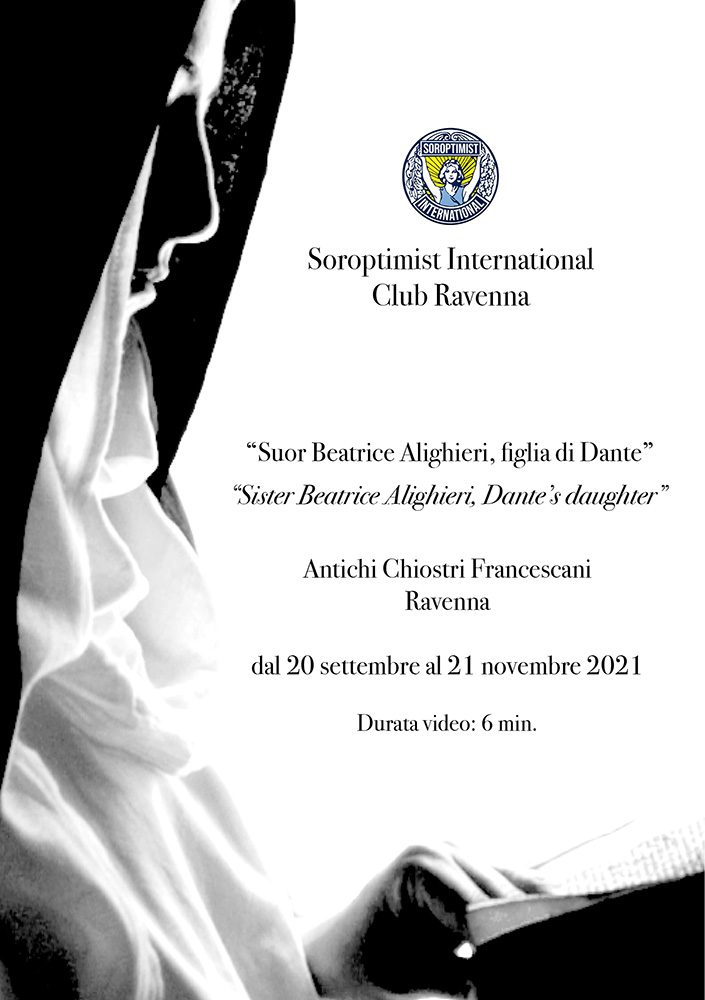
“Sister Beatrice Alighieri, Dante’s daughter” video made for the Soroptimist International Club Ravenna and projected in loop at the video room of the Franciscan Cloisters in Ravenna for the 700th anniversary of Dante Alighieri’s death. 06:33 minutes
“Suor Beatrice Alighieri, figlia di Dante” video realizzato per il Soroptimist International Club Ravenna proiettato in loop presso la sala video dei Chiostri Francescani a Ravenna per il 700° anniversario della morte di Dante Alighieri. 06:33 minuti
Anteprima 19 settembre 2021 ore 17:30
Sala Video, Chiostri Francescani Via Dante Alighieri 2/a, Ravenna
Il video d’arte realizzato da Manuela Vallicelli su commissione del Soroptimist International Club Ravenna in occasione del 700° anniversario della morte di Dante Alighieri, è dedicato a sua figlia Antonia poi Suor Beatrice. Il video è stato girato a Ravenna, fra le testimonianze del passato, ancora oggi esistenti, entro cui suor Beatrice Alighieri visse, e che vide e frequentò, dalla cripta di San Francesco alle Mura di San Vitale, all’antico capitello del suo monastero di Santo Stefano degli Ulivi, che vi si conservava nell’orto; la sua esistenza nel chiostro è rievocata nel grande giardino monastico oggi delle Clarisse Cappuccine, come nel suono delle campane dell’antica basilica di San Giovanni Evangelista, che udì; o nei libri che forse potè leggere, testi sacri o, chissà, i versi della Commedia. L’unica testimonianza del suo nome, accostato a quello del padre Dante, è nelle poche parole che i documenti tramandano.
Manuela Vallicelli’s art video, commissioned by the Soroptimist International Club of Ravenna to celebrate the 700th anniversary of Dante Alighieri’s death, is dedicated to the poet’s daughter Antonia, later known as Sister Beatrice. The video was recorded in Ravenna, among what remains of the monuments which Beatrice Alighieri saw and frequented, from the crypt of San Francesco to the walls of San Vitale, and the ancient capitello from the garden of the Monastery of Santo Stefano degli Ulivi where she lived. Her presence in the cloisters can be sensed to this day in the monastery garden of the Capuchin Poor Clares and in the chimes of the bells she would have heard in the ancient Basilica of San Giovanni Evangelista. We can also feel her presence through the books she could have read, religious texts or, who knows, the verses of the Divine Comedy. The only remaining testament to her name, near that of her father, are to be found in a few documented words that have survived to this day.
 Manuela Vallicelli